9 November 2026
RFQ vs RFP in port equipment procurement: what's the difference
A terminal operator doesn't send out the same document twice. If you've worked enough tenders, you already know an RFQ landing in your inbox means something different than an RFP, even though both get called "the tender" around the sales floor. The distinction matters because it tells you how much runway you have left and how much of the decision has already been made without you.
RFQ: the price has already been decided on
A request for quotation shows up when the buyer knows exactly what they want. They've picked the crane type, the lift capacity, the rail gauge, maybe even the specific model family, and now they just need numbers from a short list of vendors who can meet spec. An RFQ is a pricing exercise dressed up as a procurement document. By the time it hits your desk, the technical conversation is largely over. What's left is lead time, delivery terms, spares package, and whether your number beats the other two or three bidders on the list.
This is the stage where sales teams scramble, because an RFQ gives you weeks, not months, and there's rarely room to reshape the spec in your favor. If your first real signal on a project is the RFQ, you're competing on price against vendors who've probably had informal conversations with the terminal's engineering team for a year.
RFP: the scope is still being written
A request for proposal is earlier and looser. The terminal knows it needs to add lift capacity, or it's expanding the yard and needs more straddle carriers, but it hasn't locked the configuration yet. An RFP asks vendors to propose a solution: throughput targets, berth dimensions, maybe a rough budget range, and then it's on you to recommend STS versus mobile harbor cranes, RTG versus RMG for the yard, fleet size, automation level.
OEM sales teams have real room to move at this stage, because the terminal is still open to being told what it needs. Get in during the RFP stage and you can shape the technical requirements toward equipment you're strong on. Miss it and show up at the RFQ, and you're matching someone else's spec on someone else's terms.
Why neither document is early enough
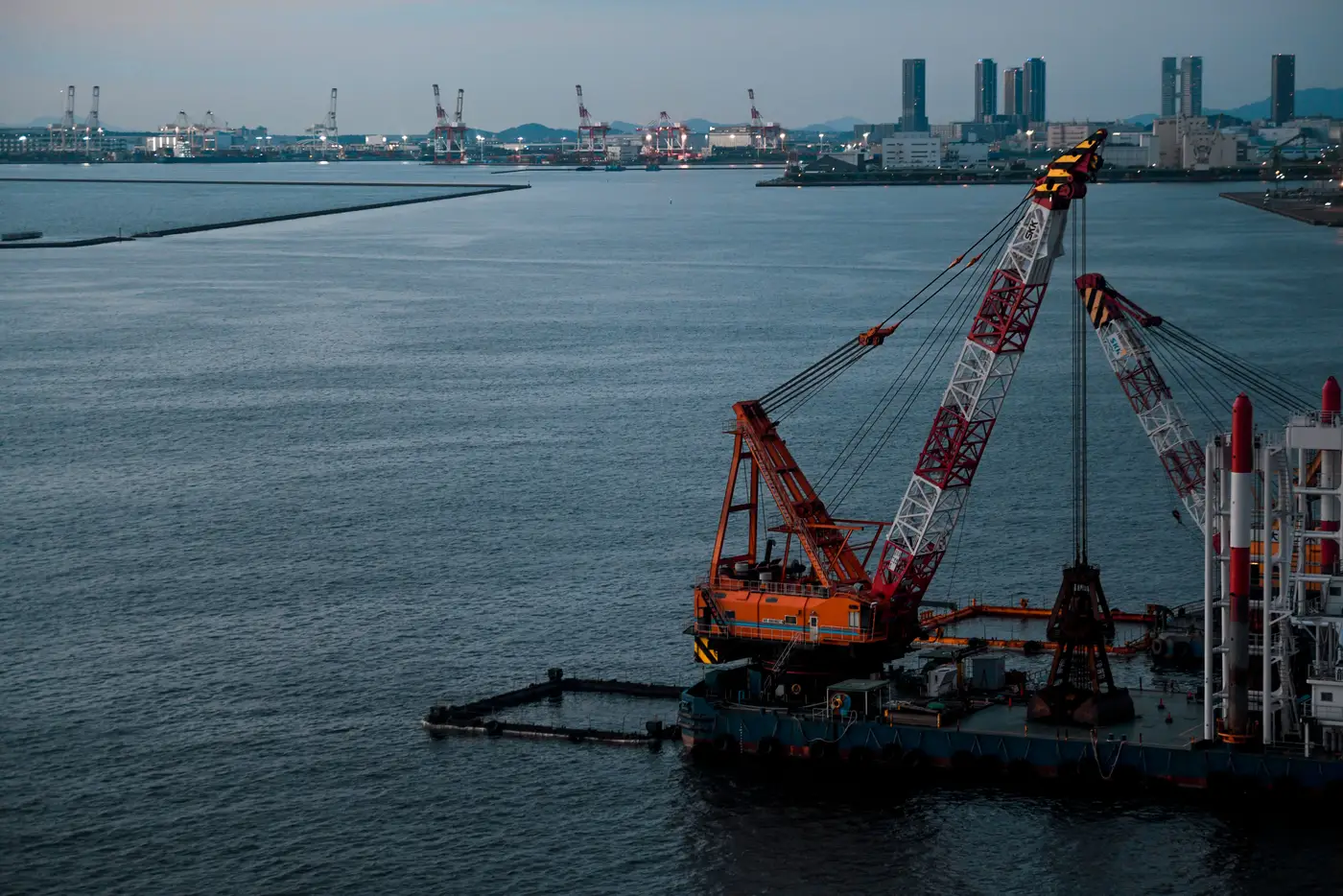
Both RFQ and RFP assume the terminal has already decided it's expanding. That decision gets made long before procurement writes anything down. Berth extension work, new quay construction, yard paving for a bigger stacking footprint, those are the physical tells that a capacity decision has already happened inside the terminal's engineering and planning functions. The tender, in either form, is just the paperwork catching up to a decision the ground has already shown you.
By the time an RFP lands, the terminal may have been planning the expansion for a year or more. Civil works don't happen overnight: a quay wall extension, a new paved stacking yard, dredging to deepen a berth, these projects run through design, permitting, and construction well before anyone drafts a procurement document. A sales director who's watching for the RFQ or even the RFP is watching for the last signal in a chain that started much earlier.
Getting ahead of the paperwork
A terminal pouring new yard pavement or extending a quay wall is telling you, months to a year ahead of any RFP, roughly what kind of crane and straddle-carrier demand is coming and roughly when it'll need to be fulfilled. Track the construction and you catch that signal before procurement puts anything in writing. That's the window where you can get a proposal in front of the terminal's planning team before the tender exists, rather than competing against a locked spec.
Terminal Expansion Watch runs a quarterly pass over berth and yard construction at terminals worth tracking, and turns what's visible on the ground into a dated alert with a rough demand window attached, built to land on your desk well before the RFQ or RFP does.
If you'd rather see the berth before the tender than compete for it after, that's the gap this is built to close.