8 October 2026
Quay crane rail gauge: what it tells you about vessel size
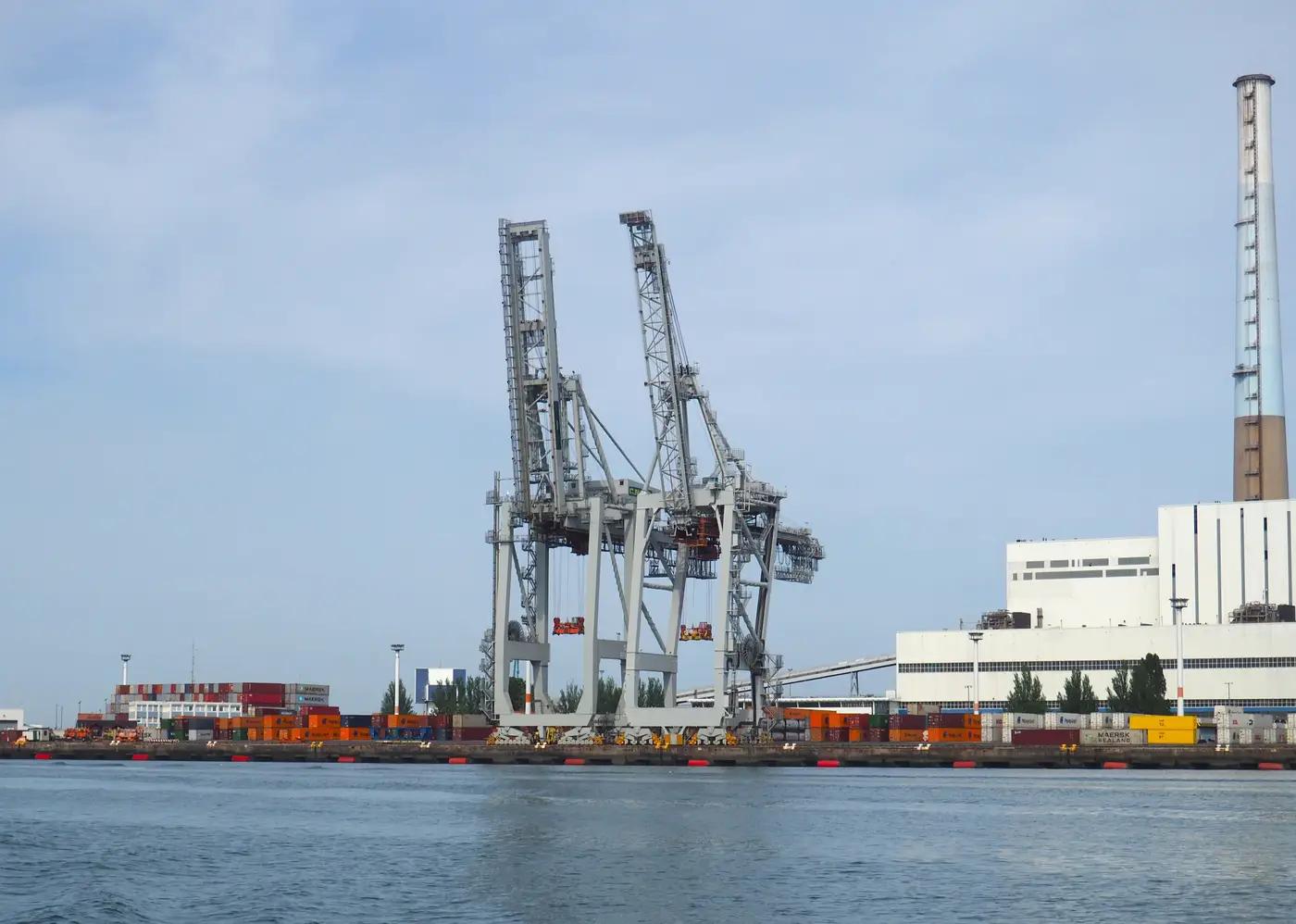
When a terminal publishes a tender for new ship-to-shore cranes, the rail gauge is one of the first numbers in the spec sheet, and it tells you more about the terminal's ambitions than almost any other line item. If you sell cranes or straddle carriers, learning to read that number before the RFP lands is worth the ten minutes it takes.
What rail gauge actually is
Rail gauge, sometimes called rail span or crane gauge, is the center-to-center distance between the waterside and landside rails the crane's portal rides on. It's not the same as the crane's outreach (how far the boom extends over the vessel) or its backreach (how far it extends landward). Gauge is about the base, the footprint the whole machine sits on and squares against.
A narrow gauge, something in the 30 to 31 meter range, was standard on cranes built for Panamax-era vessels. The portal only needed to clear a couple of rail-mounted lanes for chassis or straddle traffic underneath. As vessels got wider and terminals started running more equipment lanes under the crane, wider gauges followed: 35 meters became common, and plenty of new-build STS cranes for neo-Panamax and ULCS calls now spec 40 meters or more.
Why gauge tracks vessel size, not just crane size
A bigger vessel means more container rows across the deck, which means the crane needs more boom outreach and a taller, heavier structure to handle the air draft. That heavier upper works needs a wider, more stable base to carry the load and resist wind and seismic forces without the whole machine racking. So gauge grows in step with outreach. The structural math demands a wider base once the boom and the upper works get that much heavier.
There's a second driver that matters just as much for a terminal's planning: traffic underneath the crane. Wider gauge opens more lanes for straddle carriers, RTGs, or multiple chassis rows to move under the portal without waiting for a crane cycle to clear. A terminal widening its rail gauge on a new berth is planning for bigger ships and for more boxes moving through that berth per hour, which usually means more yard equipment too.
So when you see a terminal's civil works drawings calling out a wider rail gauge than its existing berths, read it as two signals stacked together: the vessel calls they're building for, and the straddle or RTG fleet they'll need to keep pace with the crane.
Reading the gauge number against the berth
A few rough anchors worth keeping in your head when you're looking at tender specs or construction drawings:
- 30.5 m (100 ft) gauge: legacy Panamax-class cranes, narrower vessel beam, fewer under-portal lanes.
- 35 m gauge: common on cranes built for 18-to-20-row vessels, the working range for most post-Panamax terminals today.
- 40 m and above: aimed at 22-to-24-row ultra-large vessels, usually paired with wider quay aprons and more under-crane traffic lanes.
These are rough anchors, not hard rules. Terminal operators and crane builders negotiate gauge against existing rail infrastructure, available apron width, and what's already running on adjacent berths, so a terminal might settle on a narrower gauge than its vessel calls would ideally want, simply because ripping out existing rail is expensive. Gauge alone is a partial forecast. Read it alongside the apron paving, the yard layout, and how much civil work is actually underway to get the fuller picture.
That's the harder part. Rail gauge on a tender document tells you what's already decided. The civil works, the apron paving, the new rail beds going in months before the tender, tell you what's coming. Terminal Expansion Watch tracks that construction activity on a quarterly pass across a portfolio of terminals, so a widening rail bed or a freshly paved apron shows up as a dated alert with a rough demand window attached, well before the crane tender itself appears.
If your pipeline depends on knowing which berths are being rebuilt for bigger ships before the RFP drops, that's the gap worth closing.