13 October 2026
Quay wall extension or fender job? Reading berth works from orbit
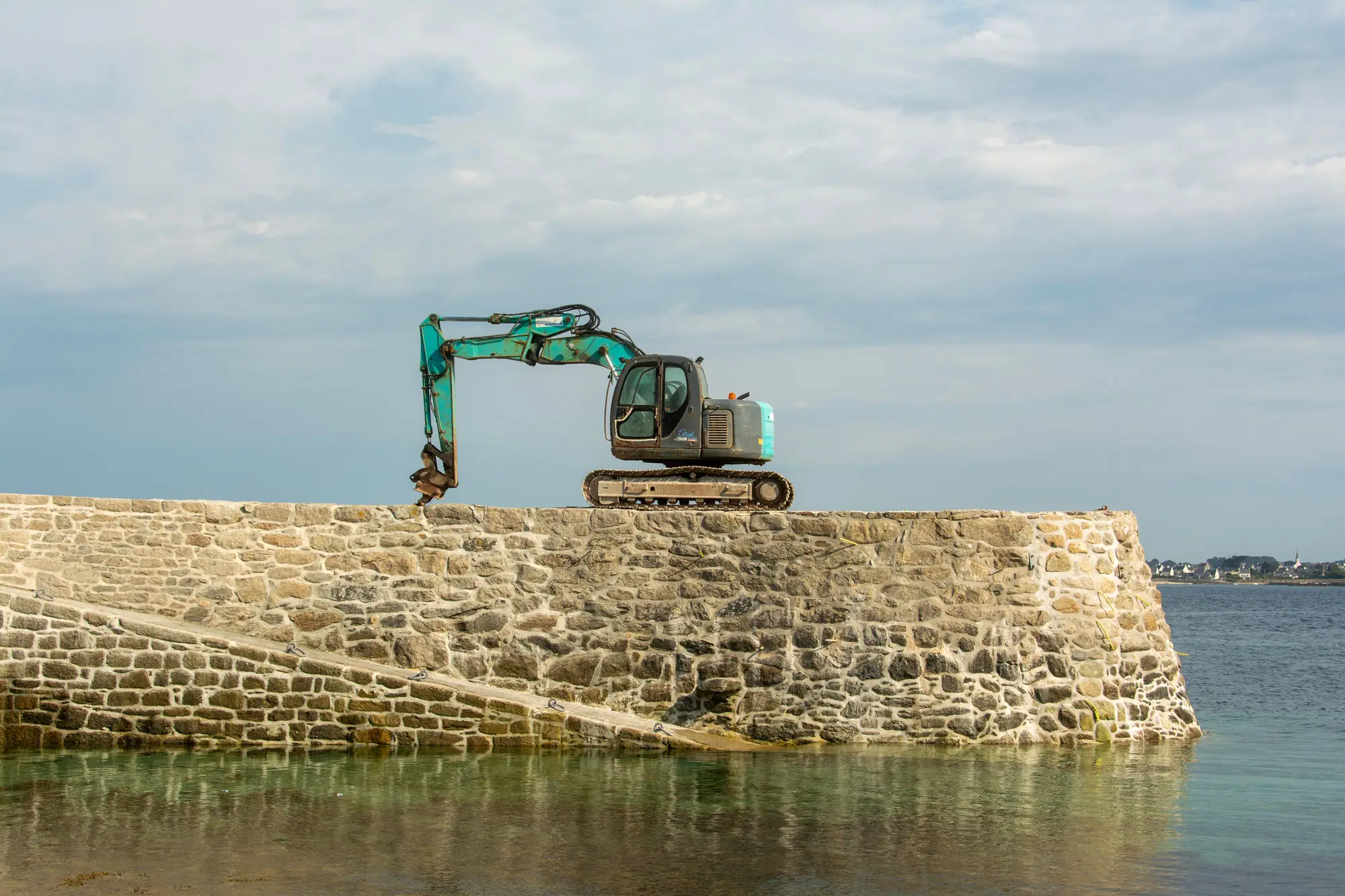
A terminal operator posts a notice about "quay improvement works" and every OEM sales team on the account reads it the same way: is this the capital project we've been tracking, or a fender panel swap that'll be done before our proposal clears legal review? The notice rarely says. The imagery usually does, if you know which details actually separate the two.
What a fender job looks like from above
Fender replacement is a face job. It happens at the existing quay line, in short runs, and it almost never touches anything behind the cope beam. From a quarterly pass you're looking for:
- A barge or jack-up platform tied up tight against the berth, not out in the channel
- Work confined to a run of 20 to 80 meters along the wall, rarely the full berth length
- No change to the yard behind the quay: same paving, same stacking pattern, same crane rail alignment
- Fender panels or UHMW facing stacked dockside in small, flat piles, well short of the bulk stockpiles you'd see on a reclamation job
- The work moves along the berth over successive passes rather than spreading outward
None of that touches the apron, the backreach, or the rail gauge, because none of it needs to. A fender swap restores what's already there. It doesn't add berth.
What a quay wall extension looks like
An extension changes the geometry of the terminal, and geometry shows up in imagery long before steel does. Look for:
- A dredging footprint well beyond the existing quay line, often with a visible turbidity plume if the pass catches it mid-cycle
- Sheet pile or caisson staging yards onshore, usually new laydown areas that weren't there the quarter before
- Reclamation fill behind the new alignment, showing as raw, unpaved ground that gets progressively graded over following passes
- New paving extending the apron outward in a straight run parallel to the new quay face, well ahead of any crane order being placed
- Rebar cages or precast cope beam sections staged dockside in long, uniform rows, a bulkier footprint than the small flat stacks fender crews work from
- Crane rail foundation trenching running parallel to the new quay face, visible as a long straight disturbance in the yard surface before any rail is laid
The sequence across passes gives it away more than any single frame: ground disturbance spreading landward and the paved footprint growing quarter over quarter. A fender job starts and finishes at the water's edge. A berth extension starts at the water's edge and walks inland.
Quay works vs. maintenance dredging
The other confusion worth sorting out: maintenance dredging gets mistaken for capital works all the time, because both involve a barge parked off the berth. Maintenance dredging is upkeep. It removes accumulated silt to hold the existing design depth, cycles disposal barges on a schedule, and leaves the quay line, the paving, and the yard footprint untouched quarter after quarter. Capital dredging, the kind that precedes a quay extension or a deepening project tied to bigger vessels and bigger cranes, shows up alongside land-side change: new paving, new rail foundations, reclamation. If the barge is there but the yard behind it looks identical to last quarter, it's maintenance. If the yard is changing too, it's capital.
Why this distinction matters a year out
A berth extension signal read correctly, pile staging, reclamation fill, apron paving extending outward, gives you a full construction cycle before the terminal issues an RFP for cranes or straddle carriers. A fender job read as a capital signal just wastes a sales cycle chasing a maintenance notice. Getting the two confused in either direction costs you: either a missed year of lead time, or a proposal built on nothing.
This is exactly the distinction Terminal Expansion Watch is built to track on a quarterly cadence, turning the early ground-disturbance signals above into a dated alert with a rough demand window, before the tender makes it official.
If you'd rather get that read done for you every quarter than squint at barge positions yourself, that's the whole point of the waitlist.