8 October 2026
How long between berth construction and the first crane order?
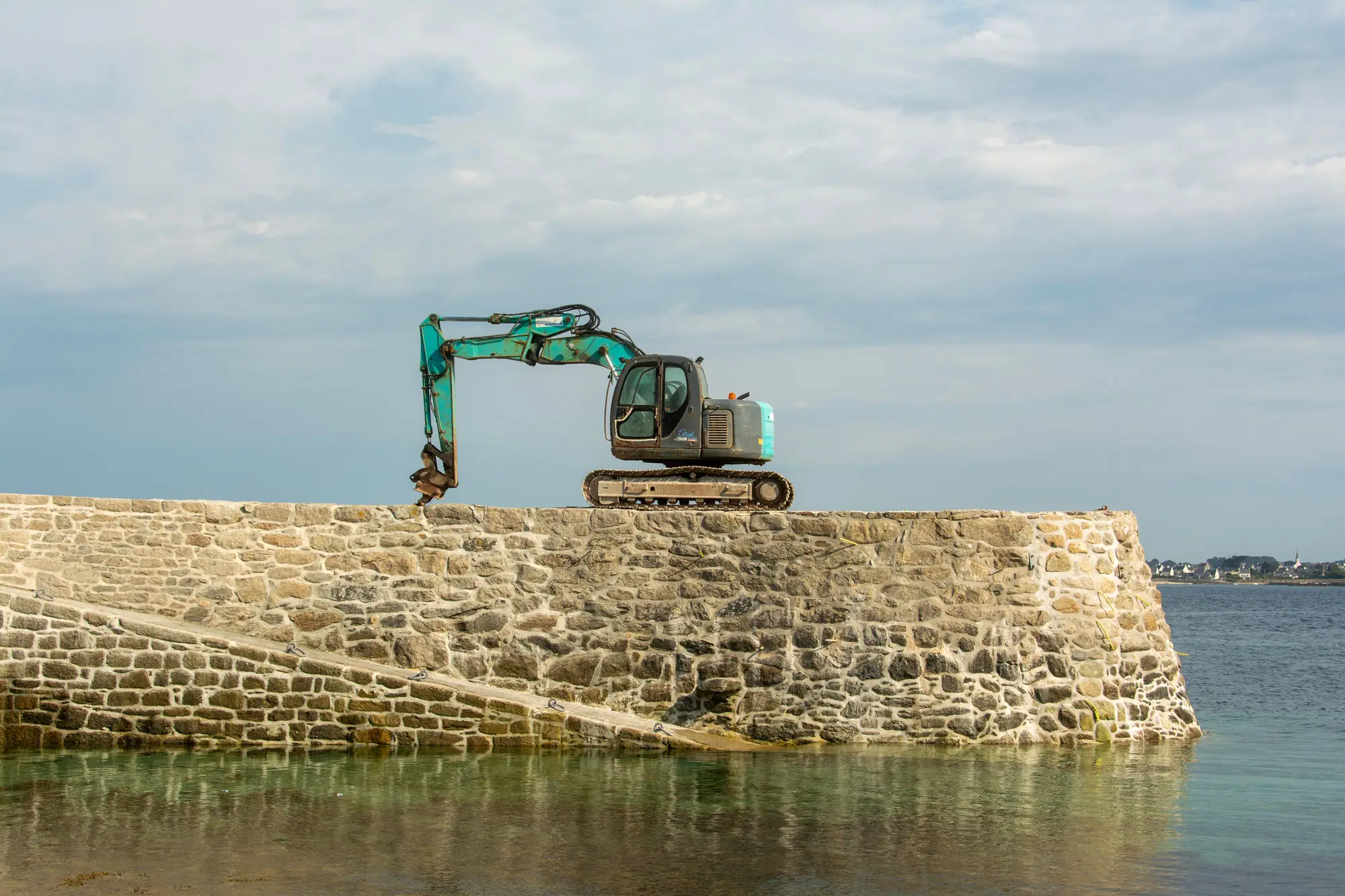
Ask five port equipment sales directors this question and you'll get five different answers, because the honest answer is "it depends on whose capital budget is moving." There's a pattern underneath the variation, though, and it's worth laying out plainly because it's the single biggest lever in whether your team gets a proposal on the table before the RFP or finds out about the tender from a competitor's press release.
Quay wall lead time versus crane procurement lag
These are two different clocks and terminal operators run them separately, which is exactly why the gap exists.
Quay wall lead time is the civil works clock: piling or caisson work, concrete pour, backfill, apron paving, utilities trenching, crane rail beam installation. Depending on method and berth length, this runs anywhere from 18 months to well over three years for a greenfield berth. A brownfield extension on an existing terminal can move faster since the geotechnical work is often de-risked by the adjacent berth already standing.
Crane procurement lag is the second clock: the time from "civil works are far enough along to spec equipment" to an actual purchase order. This is where the real forecasting problem sits. A terminal operator doesn't release a crane tender the day the concrete cures. They wait until crane rail tolerances are locked, often until the apron paving itself is finished, because changing rail gauge or span after cranes are ordered is an expensive mistake nobody wants to own. Add the operator's own internal capital sign-off cycle, which frequently doesn't start until the civil contractor hits a contractual milestone, and the gap between "we can see concrete going in" and "the RFP lands in your inbox" routinely stretches past twelve months.
Why the order date isn't on anyone's public calendar
Civil works to equipment order is not a published schedule anywhere. Port authority press releases cover berth openings and investment announcements. They almost never mention when the crane tender will drop, because the operator often hasn't decided internally yet. The capital committee that approves the crane budget is frequently a separate conversation from the one that approved the dredging and quay wall contract, sometimes running on a different fiscal year entirely.
That's the structural reason crane RFPs feel sudden to OEM sales teams even when the berth construction was visible for two years beforehand. The civil works were never a secret. The order timing was never published.
There is something to read, though. Berth length, apron width, and the sequencing of paving versus rail beam work tell you roughly what class of crane the terminal is building toward, and how far along they are in the process that precedes the tender. A terminal that's paved out to a rail gauge consistent with post-panamax STS cranes and has finished backfill behind the quay wall is closer to a tender than one still driving sheet pile. It's a construction-sequence read, the kind of thing a quarterly look at the berth actually shows you, months before anyone sends out a bid package.
What this means for a sales calendar
Port authority announcements and crane manufacturer lead-time charts both describe the same thing: the civil contractor's clock. Build next year's pipeline off those alone and you're forecasting the wrong clock, because the gap between the civil clock and the procurement clock is exactly the window where a proposal gets in early or doesn't. Terminal Expansion Watch tracks that gap by watching the berth work itself on a quarterly pass, turning the paving and quay progress into a dated forecast window instead of a guess.
If your forecast calendar is still built around the tender date rather than the construction date behind it, it's worth moving that start line back by a year.