8 October 2026
Capital dredging vs maintenance dredging: telling them apart in satellite imagery
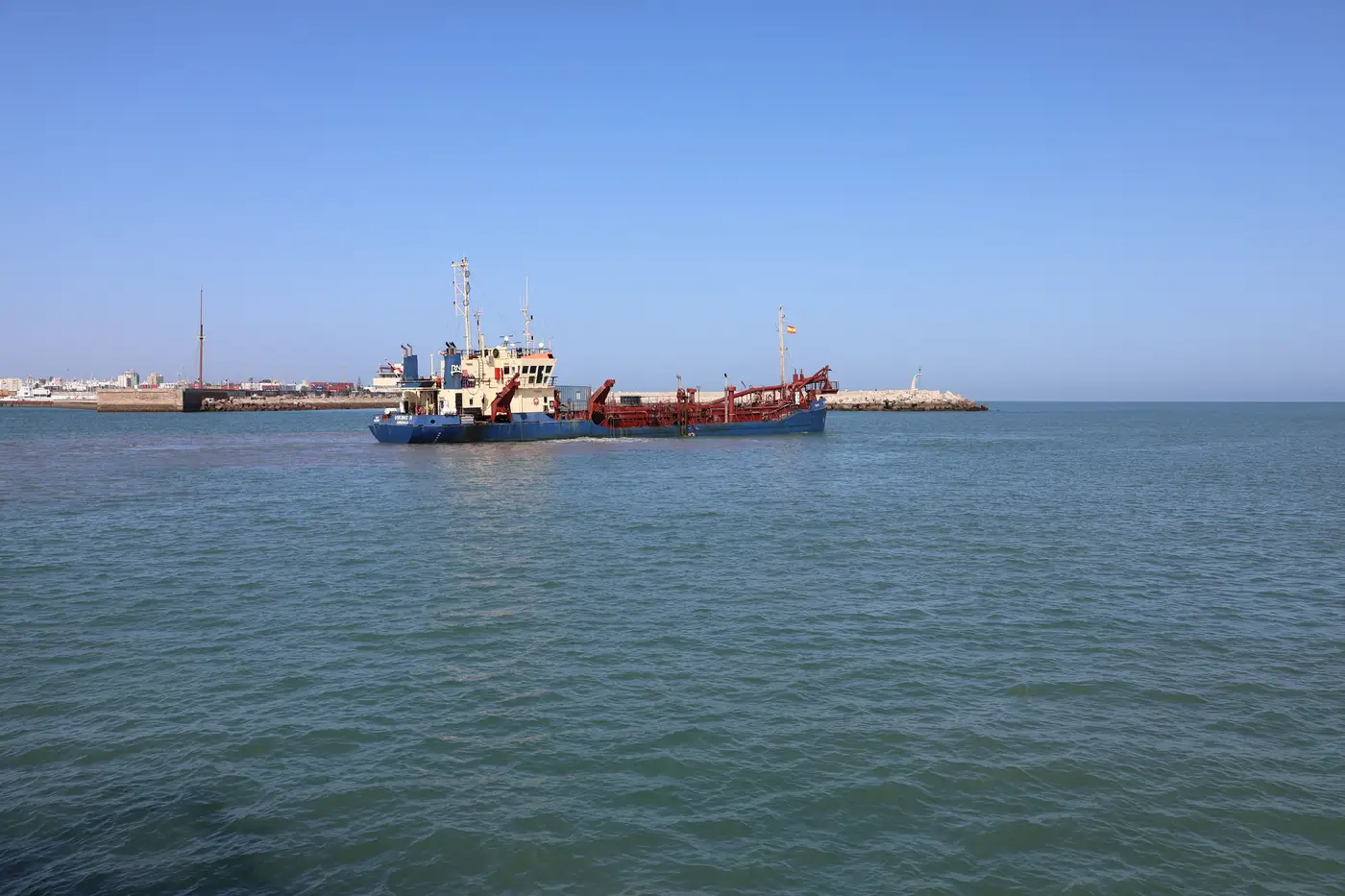
A trailing suction hopper dredger sitting off a terminal doesn't tell you much on its own. What matters for a forecast is whether that vessel is deepening an existing channel to keep ships moving, or cutting a new alignment that will need a longer quay, a bigger yard, and eventually a crane order. Those look almost identical from altitude if you're not watching for the right signals.
The difference that matters is scope, not activity
Maintenance dredging keeps an existing channel or berth pocket at its design depth. Sediment builds up, draft restrictions creep in, and the port authority or terminal operator runs a routine campaign to restore the depth that was already permitted and already dredged once. It's recurring, it's bounded to the existing footprint, and it doesn't change what the terminal can handle. A berth that's always taken Panamax vessels will still take Panamax vessels after maintenance dredging. No new crane reach, no new straddle fleet, nothing for a sales team to chase.
Capital dredging is different in kind, not just degree. It's channel deepening to bring in a bigger class of vessel, a new berth pocket cut alongside an existing quay, or an approach realignment to serve a terminal extension that isn't built yet. This is the work that precedes a quay wall going in, which precedes a paving contract, which precedes an STS or mobile harbor crane tender. If you're forecasting crane demand a year out, capital dredging is one of the earliest physical signals you get, often well before a single piling goes into the ground.
What to look for in the imagery
A few things separate the two in a quarterly satellite pass, even without access to the dredging contract itself.
Location relative to the existing berth line. Maintenance dredging stays inside the current channel or alongside the current quay face. Capital dredging shows up outside that footprint: a new cut running parallel to an existing berth, an approach channel widened beyond its charted limits, or turning basin work at a point where there's no current traffic to justify it.
Dredge plant and campaign length. A cutter suction dredger parked in one spot for weeks, with a pipeline running to a reclamation area, points to capital work. These produce a lot of material and that material typically goes somewhere specific, either land reclamation behind a future quay or an offshore disposal ground sized for a large cut. A trailing suction hopper dredger making repeat short runs between a channel and a nearby disposal site, with no reclamation activity, reads more like routine maintenance.
Plume behavior over successive passes. One pass showing a turbidity plume in a channel that's shown the same plume every year or two is maintenance. A plume appearing for the first time in a spot with no dredging history, or growing in extent quarter over quarter, is worth flagging.
What shows up next to it. This is the tell that closes the case. Capital dredging headed toward a terminal expansion tends to show up alongside other works. Backland being cleared or paved, a quay wall under construction, stockpiled rock or fill near the shoreline. Maintenance dredging shows up alone, because there's nothing else that needs to change.
None of these signals is conclusive by itself. A cutter suction dredger could be working a one-off capital project with no yard behind it yet, or a port could be running an unusually large maintenance campaign after a storm. The value is in watching the same terminal across several passes and reading the pattern, which is the whole premise behind the quarterly berth-and-yard tracking that turns these signals into a dated expansion call for a specific terminal.
Why the lead time is worth chasing
By the time a capital dredging campaign gets reported in a trade publication or shows up in a tender notice, the channel deepening is usually already done and the quay contract is already awarded. The window where a sales director can get ahead of that, flag the terminal internally, and get a proposal drafted before the RFP lands, is the window between the dredge plant showing up and the first visible quay or paving work. That's a matter of months, not years, which is exactly why it's worth watching on a fixed schedule rather than waiting for the industry to announce it.
If you've got a list of terminals you'd rather watch than guess about, that's the alert Terminal Expansion Watch is built to send.